- 66.1
- Posts
- Why calorie counting doesn't work for weight loss (and what to do instead)
Why calorie counting doesn't work for weight loss (and what to do instead)
Build your health, reclaim your freedom (Issue #114)

Marcus Frick
March 29, 2025
Read time: 12 minutes
Good morning, 66.1ers.
Welcome to issue #114 of 66.1.
Housekeeping
Full access to this post and podcast is reserved for paid members of 66.1.
Free subscribers: if you want to hear my thoughts on:
The difference between calorie counting and food tracking
Why calorie counting may not be the best strategy for weight loss
My top 3 recommendations for ensuring your diet strategies are sustainable
Get access to today’s post and all 114 issues of 66.1 by upgrading your subscription at the button below.
Paid Subscribers: thanks for your support. Your contribution allows us to to add top talent to our team and invest in the latest technology as we seek to make 66.1 your #1 longevity resource.
Today’s issue brought to you by Freedom Fats
Setting the scene
I alluded to this Saturday’s topic in our March Q&A episode published Monday. It’s one I’ve encountered with multiple coaching clients and it’s important because it sends many folks in the wrong direction when it comes to weight loss.
They want to lose weight, so they track every single thing they put in their mouth, totaling up their calories and macros (short for macronutrients–the total grams of protein, fat, and carbohydrate) every day. The logic is, if you know the number of calories your body burns on a daily basis, you can do some simple math, eat fewer calories than you burn, and lose weight.
But, while the logic is sound, it’s unfortunately not quite right.
3 reasons calorie counting doesn’t work:
It’s unsustainable
Complexity is the enemy of consistency. If you build a habit that requires you to count your calories and macros for 30+ minutes every single day, you’re liable to fall off the wagon when your kid gets sick, you have to travel for work, or you have family in town. When you fall off the wagon and don’t have any alternatives in place, you’re unlikely to pick up the habit again because it’s so demanding.
Multiple coaching clients have shared with me that their experience with weight loss via calorie counting resembles a roller coaster: their weight drops for the first couple months (even a year in some cases), but then life events happen and they stop counting calories. The habit is so demanding that the thought of resuming it is overwhelming. So they don’t resume it. Unsure what to do in lieu of counting calories, they do nothing.You can guess how it plays out from there: they gain the weight back. After another year, they get so fed up with their weight gain that they return to calorie counting and the roller coaster repeats itself.
The interesting thing about calorie counting is that you’ll find plenty of evidence that it works. This is true, as long as you stick to the practice. Like any healthy habit, it’s not going to help you if you don’t do it. And the same studies that emphasize its efficacy also indicate a fatal flaw: only 33% of participants actually counted their calories on a consistent basis.
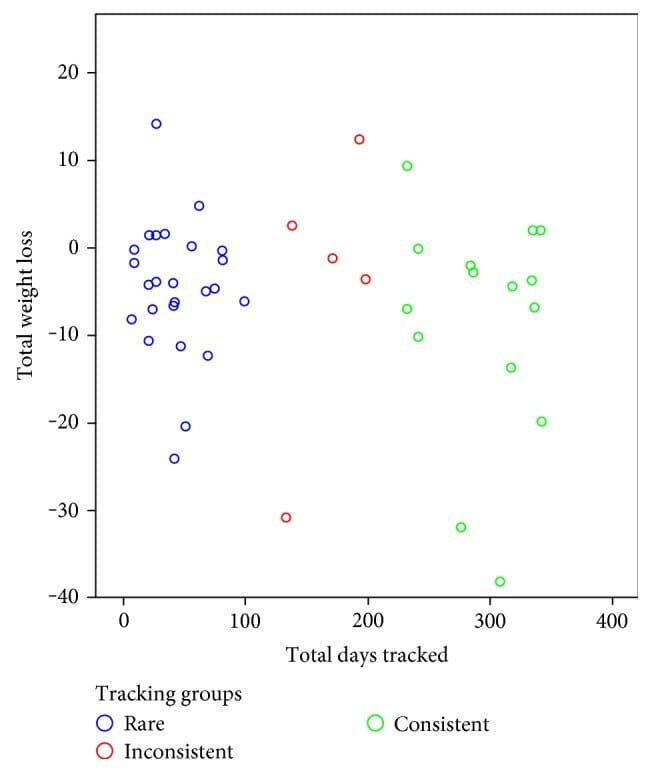
Courtesy of Ingels et. al., “The Effect of Adherence to Dietary Tracking on Weight Loss: Using HLM to Model Weight Loss over Time”
Not all calories are created equal
An example will help here. Let’s say your daily target caloric intake is 2,500 calories. You can get these calories a number of different ways. 2,500 calories from blueberries would require you to eat 31.25 cups of them. 2,500 calories from a Cookies & Cream Brownie at Crumbl Cookie, however, would require just 2 brownies.
While neither of these dietary options is recommended, the point holds: caloric density varies immensely. Reducing your weight loss problem simply to the “calories in, calories out” math equation is a recipe for dramatically misaligned nutrition. Better to focus on eating a balanced diet complete with whole foods (including blueberries, but don’t forget your healthy fats and proteins!).
According to this study, “there is no single best strategy for weight management…Reducing daily caloric intake is the most important factor for weight loss.” The authors, overall, advise a diet composed of mostly whole foods with very few processed foods.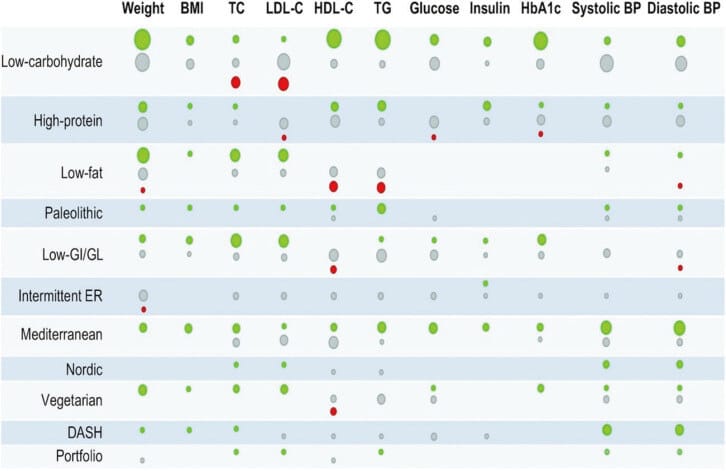
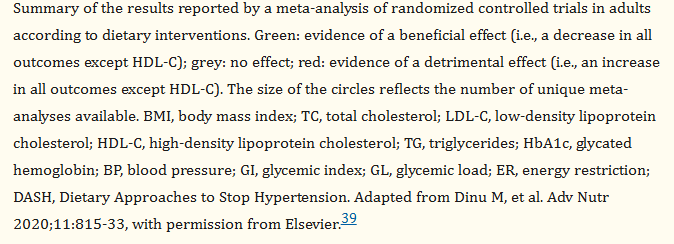
Courtesy of Ju Young Kim, “Optimal Diet Strategies for Weight Loss and Weight Loss Maintenance”
It sends the wrong message
When your body doesn’t get enough nutrients, it does the opposite of what you want. Eating at too dramatic a calorie deficit can send your body a signal that there’s not enough food around. It thinks it needs to hold on to extra energy and actually begins to store fat and burn muscle.
The logic for this transformation is simple: muscle burns 3 times more calories (6 cal/lb/day) than fat (2 cal/lb/day). More fat = less caloric need. It’s easier for your body to maintain fat than it is muscle.
While this trap is avoidable if you don’t overdo your calorie deficit (and make sure you’re getting your protein), it’s an important possibility to hold in the back of your mind.
3 strategies to make sure you’re losing weight sustainably
Start slow
Weight loss is a tough nut to crack, especially when you’re constantly bombarded by marketing for processed foods (did you know Frito-Lay spent more than $100 million in advertising last year?)
So–and this is critical–you’ve got to be patient with yourself. Realize the enemy you’re up against. Be patient with yourself (it takes an average of 66 days to build a new habit). And make incremental changes. The most successful clients I’ve seen navigate the weight loss journey all started with very small dietary changes. Switch your McGriddle out for a smoothie. Not every day, though. Do it just 2x/week to start. Once that starts to feel easy, bump it to 3x/week. After you’ve hit 5x/week, replace your Mountain Dew with an Olli 1x/week.
Continue to add small habits like this over the course of months, and you’ll be in a totally different place a year from now.Make it simple
We want to avoid the roller coaster of on-and-off calorie counting mentioned earlier. If you’re on a weight loss mission, rather than counting every last calorie and macro, just track the food you eat every day. Write down what you ate. It should take 5 minutes or less every day. Don’t write down the calorie or macro counts. Food items and that’s it.After you’ve been tracking for a week, it’s time to flip through your notebook, Notes app, or wherever you wrote down what you ate over the past week. What trends do you notice? What’s missing from your diet? What types of foods could you afford to eat less of? How can you make healthy diet habits easier (and unhealthy habits harder)?
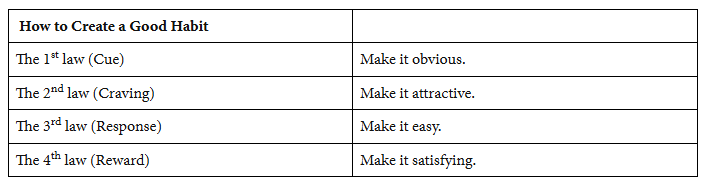
90% of clients who start this food logging practice don’t need to add any further restrictions to their dietary protocols. The attention paid to their diet simply by logging their food intake is enough to bring their dietary habits in line with their weight loss goals.This is James Clear’s 3rd law in his “How to Create a Good Habit” framework:
Hold on loosely
Life will happen. You will have “cheat days”. That’s ok. Unless you’re preparing for a bodybuilding competition, there’s no reason to get bent out of shape about these slip-ups. You’re a human, and life’s for living.
When you find yourself struggling to stick with your healthy habits, zoom out. Look at your trends over the past 3, 6, and even 12 months. If you’re generally headed in the right direction, keep up the good work. If not? Circle back to building one small habit today that will move you one step closer to your health goals.
That’s all for this week.
Before you go, though, I’ve got a question for you: If you’ve succeeded at losing weight, what’s been the single biggest contributor to your success?
I’d like to compile answers to share in a future issue.
Have fun out there.
Marcus
Reply