- 66.1
- Posts
- Behind the scenes: Why I'm not a doctor
Behind the scenes: Why I'm not a doctor
Build your health, reclaim your freedom (Issue #111)


Josiah Lulf & Marcus Frick
March 22, 2025
Read time: 12 minutes
Good morning, 66.1ers.
This week's overview
66.1 is the result of my decision not to attend medical school
3 reasons why I chose entrepreneurship instead of a career in medicine
Plus: how navigating a life transition informed this decision
Housekeeping
Full access to this post and podcast is reserved for paid members of 66.1.
Become a member to get full access to this post and all future Saturday Deep Dive posts.
Members also have access to monthly Q&A issues and episodes, roundups of the top issues of 66.1, and collections of the wisest insights from the 66.1 community.
Update: we’re building out additional features for 66.1 paid members. Keep an eye out in the coming weeks!
If you don’t read 66.1 in the Substack app, I highly recommend it. Download the app to access all 111 issues of 66.1.

Get more from Marcus Frick in the Substack app
Available for iOS and Android
Today’s issue brought to you by Freedom Fats
Setting the scene
This time 3 years ago, I thought I was headed to medical school. I was stressed out, wondering if I’d be let in off the waitlist, and if so, when I would move to a new city and how the heck I would afford the next 4 years of life, during which I was to pay hundreds of thousands of dollars in tuition while not working. Whew.
I had also just met a girl (and I liked her 😏) and, well, these types of encounters have a way of clarifying your thinking. You start asking questions like, “How can this work?”, “What could a future together look like?”, and “Is she really going to fall for a guy who follows a predetermined path instead of creating his own?”
3 years later and I have the answers to all three of those questions. They go something like this:
It’s not going to work if something about your current trajectory doesn’t change dramatically
It could be literally whatever you want (if you have the courage to
No. She’s not a settler.
Probably not the intro you were expecting.
But moments like these have a way of forcing you to look in the mirror of life and ask yourself if you’re actually living your path.
Medical school wouldn’t have been that for me.
Now—why I jumped off the medical school train.
3 reasons I’m not a doctor:
I didn’t want to peddle prescriptions
That line is reductive. So let’s clarify: doctors do plenty more than prescribe medications to their patients. BUT–and I say this with confidence after spending the past 3.5 years working directly with patients at the Mayo Clinic–a significant portion of a doctor’s patient care is spent managing medications and refilling prescriptions. Doctors are, on a whole, so busy with managing prescriptions that they don’t have time to drill down on the lifestyle changes that are the true foundation of health.
According to the National Center for Health Statistics, 71.9% of patients’ visits to their doctor’s office were focused on medications…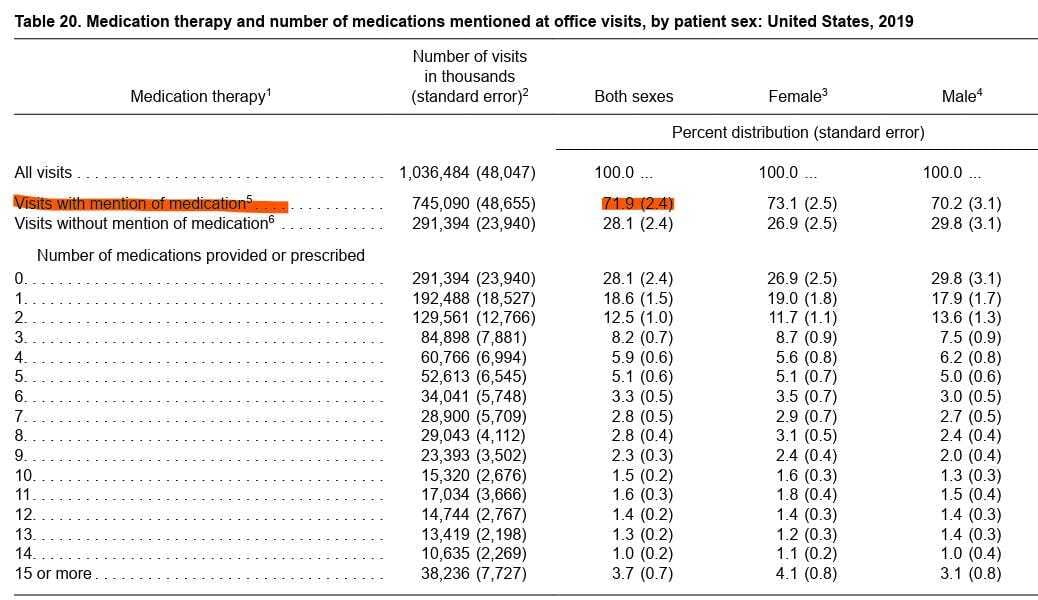
Freedom
The bargain for going to medical school looks something like this:
You take out $202,453 in loans (US average) to pay for 4 years of school during which you’re likely not earning any money. And, because there aren’t all that many medical schools and doctor is an in-demand career path, you go live wherever you get accepted into school. That might be Nebraska, it probably won’t be California. And after you do this for 4 years of medical school, you have to do it all over again for 3 years of residency training. For someone who needs the mountains, this was an awfully steep price to pay.
This view didn’t exist anywhere I interviewed for medical school…
I wanted to change things
My cheeky response to friends and family who asked, “Why do you want to be a doctor?” was always, “So I can tell people to eat clean, exercise, and get their sleep.” In retrospect, this isn’t exactly the bedside manner they look for in medical school. Fortunately, I never dropped this line in a medical school admissions interview 😬.
But my intentions were pure: I wanted to promote a world of empowerment rather than dependence. One in which prescription medications are the exception rather than the norm, and people are confident in their ability to build their health through healthy habits and routines. And my logic was that, once I had the letters “MD” behind my name, I would have the authority to start changing the system. AKA once I had the system’s stamp of approval, then and only then would I give myself permission to start changing it. Talk about a waste of time, energy, and life. Better to skip the 7 year approval process that would have me 35 years old, living somewhere I didn’t appreciate, and in $200k+ of debt, and just get busy changing things.
Which leads us to the next section…
3 reasons I’m still writing 66.1 after 20 months and 110 issues
You need education
The average American has been sold the narrative that their health challenges are due to an absence of medication. Obesity is an Ozempic deficiency. ADHD is an Adderall deficiency. High cholesterol is a Lipitor deficiency. And that’s just flat wrong. Certainly all these medications have their place. But I’ve seen so many people dependent on them and subsequently disempowered, that I can confidently say we, as a society, have taken it too far. The Ozempic studies are rigged, 5-year-olds don’t need to be on a medication whose chemical name includes “amphetamine”, and there are dozens of lifestyle interventions that ought to be touted in tandem with cholesterol lowering medications.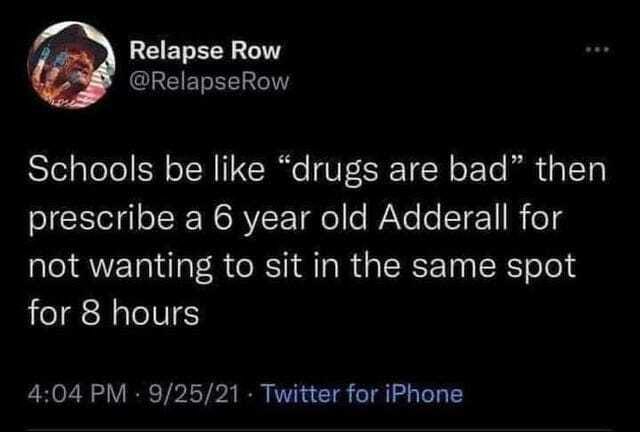
Food for thought…
And you need to balance it with common sense
“Education” is a start. But you don’t have 4 hours for the next podcast from a longevity expert. SAT words like atherosclerosis, hypercholesterolemia, and ketoacidosis are confusing and distracting. They make scientists sound authoritative while making the layperson afraid, confused, and disempowered. We feel like health is a matter of genetics and luck. Like prescriptions are an inevitable part of our future. Like our day-to-day decisions don’t really matter. Of course that’s not true, but it is the status quo.
And we haven’t even talked about incentives. In the US, pharmaceutical companies make a TON of money. It’s in their best interest for you to be sick, confused, and afraid. Even better for them, the most commonly prescribed pharmaceutical drugs across the US are lifetime meds (meaning you’ll likely take them for decades once you start).As you work your way down this list, it’s worth noting that 7 of the top 10 meds are “lifetime” meds—meaning that patients are likely to be on them for years. Talk about perverse incentives…
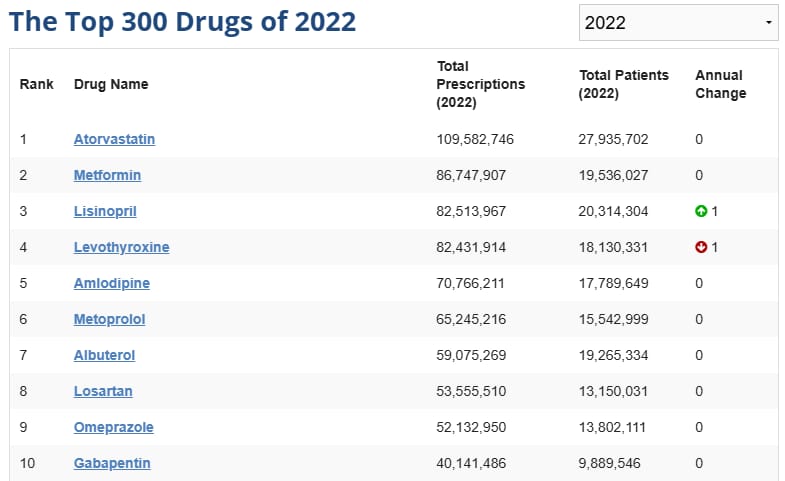
Data by ClinCalc.com
So you can rebuild your health from the inside out
Your doctor doesn’t have the time to take you from unhealthy to positively healthy (think robust, vigorous, and strong–not simply disease-free). And that’s certainly not their fault. It does, however, shift responsibility to you, the individual. Your doctor will keep you alive. But it’s on you to cultivate the healthy habits, routines, and relationships that are the foundation of a long, healthy life. It’s why I’ve been in your inbox every Saturday for a while now. Getting educated, building healthy habits, and maintaining your health can feel like a full-time job. We’re here at 66.1 to help carry just a bit of that burden.
That’s all for this week.
If you read this far, I’ve got a question for you…
What’s the #1 topic you’d like to learn more about from 66.1?
Reply here and I’ll tackle the topic in a future issue.
Have fun out there.
Marcus
Reply